
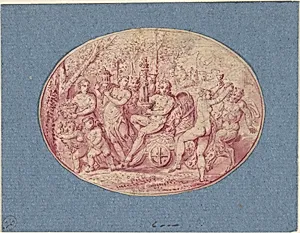
Ornamental design of Bacchanalia
17th century
Medium
Pen and red ink, brush and red wash, oval.
Dimensions
sheet: 2 1/2 x 3 5/16 in. (6.3 x 8.4 cm)
Classification
Drawings
Department
Drawings and Prints
Museum
Metropolitan Museum of Art, New York, NY
Credit
The Elisha Whittelsey Collection, The Elisha Whittelsey Fund,1960
Accession Number
60.620.213
Rights
Public Domain
Tags
Art Historical Context
This delicate *Ornamental design ofchanalia*, created by an anonymous Dutch artist in the 17th, captures the exuberant spirit of classical revelry. Rendered in pen and red ink with brush and red wash on petite oval sheet (just 2½ x 3⅜ inches), it evokes the chaotic joy of Bacchus, the Roman god of wine—tagged simply as "Bacchus" in the collection. The warm red tones and fluid lines suggest a festive scene of bacchanalian merrymaking, likely featuring mythical figures in ecstatic dance amid vines and garlands. Hailing from the Dutch Golden Age, this drawing reflects the era's fascination with antiquity, even in a Protestant society where ornate designs adorned luxury goods like silverware, ceramics, or textiles. Anonymous works like this were often preparatory sketches by skilled workshops, blending Northern precision with Baroque exuberance. The oval format hints at its use for cameos, medallions, or decorative panels, showcasing how everyday artisans drew inspiration from Greco-Roman myths to elevate functional art. Preserved in The Metropolitan Museum of Art's Elisha Whittelsey Collection (acquired 1960), this gem highlights the technical virtuosity of red wash—a favored medium for its luminous, jewel-like effects—and the cultural role of such designs in disseminating classical themes across Europe. A tiny window into 17th-century creativity!