
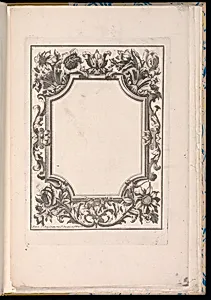
Ornamental Frame Design
mid- 18th–late 18th century
Classification
Department
Smithsonian Collection
Museum
Smithsonian American Art Museum
Credit
Purchased for the Museum by the Advisory Council
Accession Number
1921-6-267-10
Rights
Public Domain
About this artwork
Research in Progress
Art Historical Context
Louis Crépy (1680?–1760), a French engraver, crafted this *Ornamental Frame Design in the mid- to late 18th century a period when elaborate decorative arts flourished in Europe. As a print from the Smithsonian American Art Museum's collection—purchased by the Advisory Council— it exemplifies the intricate ornamental patterns that adorned frames, cartouches, and architectural elements during the Rococo era's transition toward Neoclassicism. Crépy specialized in such designs, providing for artisans to replicate in gilding, woodwork, or silverwork, bridging fine art and craft. Though the exact medium remains under research, its classification as a print highlights the era's booming printmaking industry, which democratized sophisticated designs for workshops across France and beyond. These frames often featured scrolling foliage, shells, and asymmetrical motifs, reflecting the playful exuberance of Rococo aesthetics while hinting at emerging restraint. Acquired for the Smithsonian, this piece underscores transatlantic exchanges in design influence, inspiring American decorators amid growing colonial elegance. Visitors will appreciate how Crépy's work captures the artistry of ephemera—functional yet beautiful blueprints that shaped 18th-century interiors, inviting us to imagine them encircling portraits or illuminating grand salons. (198 words)