
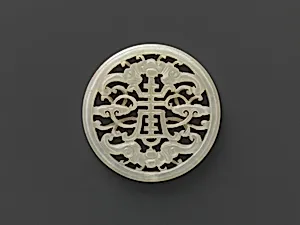
清中期 玉福壽紋飾|Ornamental plaque
Unknown Artist
18th–19th century
Medium
Jade (nephrite)
Dimensions
H. 3/16 in. (0.5 cm); Diam. 2 3/8 in. (6.1 cm)
Classification
Jade
Culture & Period
China · Qing dynasty (1644–1911)
Department
Asian Art
Museum
Metropolitan Museum of Art, New York, NY
Credit
Gift of Heber R. Bishop, 1902
Accession Number
02.18.571
Rights
Public Domain
Art Historical Context
This delicate ornamental plaque, crafted from nephrite jade during China's Qing dynasty (1644–1911) in the mid-18th to 19th century, exemplifies the era's mastery of jade carving. Measuring just 3/16 inch high and 2⅜ inches in diameter, its thin, disc-like form suggests it served as a decorative accessory—perhaps pinned to clothing, a belt, or used in jewelry. The surface features intricate *fu* (fortune or bat) and *shou* (longevity) motifs, auspicious symbols deeply rooted in Chinese culture, invoking blessings of prosperity and a long life. Qing jade artisans elevated nephrite—a tough, white-to-green stone revered since ancient times—to new heights of refinement, often polishing it to a luminous glow and incising fine details with precision tools. This plaque reflects the dynasty's opulent aesthetic, where imperial workshops produced such items for elites, blending technical virtuosity with symbolic depth. Donated to the Metropolitan Museum of Art in 1902 by Heber R. Bishop, it stands as a testament to Sino-Western cultural exchange. Though small, its craftsmanship invites close inspection, revealing the patience required to transform unyielding jade into a talisman of enduring good fortune—a perfect emblem of Qing artistry's elegance and optimism.