
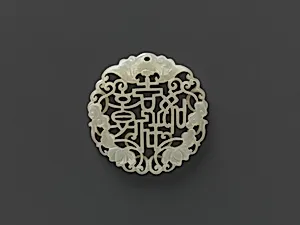
清中期 玉“吉祥如意”紋佩|Pendant
Unknown Artist
18th–19th century
Medium
Jade (nephrite)
Dimensions
H. 3/16 in. (0.5 cm); Diam. 2 1/8 in. (5.4 cm)
Classification
Jade
Culture & Period
China · Qing dynasty (1644–1911)
Department
Asian Art
Museum
Metropolitan Museum of Art, New York, NY
Credit
Gift of Heber R. Bishop, 1902
Accession Number
02.18.572
Rights
Public Domain
Art Historical Context
This exquisite jade pendant, crafted during the mid-Qing dynasty (18th–19th century), exemplifies the pinnacle of Chinese jade carving artistry. Fashioned from nephrite—a tough, translucent green stone revered in China for millennia—the piece measures a delicate 2 1/8 inches (5.4 cm) in diameter and just 3/16 inch (0.5 cm) thick. Its surface is adorned with intricate "吉祥如意" (auspicious ruyi) motifs, featuring the curving, cloud-like form of the ruyi scepter, a symbol of good fortune, harmony, and fulfilled wishes. In Qing imperial culture, jade pendants like this were prized personal ornaments, often worn suspended from belts or necklaces by scholars, officials, or elites. Nephrite's natural luster and subtle color variations were meticulously polished and incised using fine tools, showcasing the era's advanced lapidary techniques that transformed raw stone into talismanic jewelry. These pieces blended functionality with profound symbolism, invoking prosperity amid the dynasty's prosperous yet turbulent years. Today, this pendant graces the Metropolitan Museum of Art's Asian Art collection, a gift from Heber R. Bishop in 1902. It invites visitors to appreciate how Qing artisans captured eternal auspiciousness in a small, wearable form, bridging ancient traditions with everyday elegance.