
Ornamental Vase Design
Classification
Bound print
Department
Smithsonian Collection
Museum
Smithsonian American Art Museum
Credit
Purchased for the Museum by the Advisory Council
Accession Number
1921-6-245-3
Rights
Public Domain
About this artwork
Research in Progress
Art Historical Context
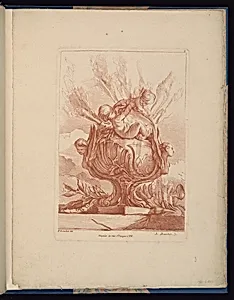
François Boucher, a of the French Rococo style (1703–1770), created this *Ornamental Vase* around 1738, capturing the exuberant spirit of 18th-century decorative arts. Working under Louis XV at Versailles, Boucher was renowned for lavish, playful motifs—think swirling acanthus leaves, delicate shells, and blooming flowers—that embodied Rococo's love of asymmetry, elegance, and fantasy As a painter, tapestry designer, and engraver, he bridged fine art and craft, influencing porcelain makers at Sèvres and silversmiths across Europe. This bound print, likely a pattern from an artist's album, served as a blueprint for luxurious vases, guiding artisans in translating Boucher's whimsical visions into three-dimensional splendor. Rococo designs like this fueled the opulent interiors of the aristocracy, blending artistry with everyday luxury objects. Though the exact medium awaits further research, its preservation highlights the era's fusion of printmaking and ornamental innovation. Acquired for the Smithsonian American Art Museum by the Advisory Council, this piece invites us to admire how Boucher's intricate lines sparked a wave of refined beauty. Imagine it adorning a gilded salon— a testament to creativity's enduring allure!