
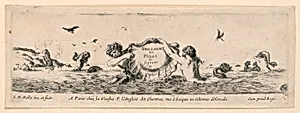
Ornamenti di fregi e fogliami
Classification
Department
Smithsonian Collection
Museum
Smithsonian American Art Museum
Credit
Purchased for the Museum by the Advisory Council
Accession Number
1921-6-147-1
Rights
Public Domain
About this artwork
Research in Progress
Art Historical Context
Stefano della Bella (1610–1664), a masterful Italian printmaker of the Baroque era, created *Ornamenti di freg e fogliami* 1648. Working primarily in Florence, Rome, and Paris, della Bella was renowned for his intricate etchings that captured everything from bustling street scenes to elaborate decorative motifs. This print, housed in the Smithsonian American Art's collection, exemplifies his skill in ornamental design, featuring friezes and foliage patterns that reflect the opulent tastes of 17th-century Europe. As a print, the work belongs to a medium della Bella helped elevate through his precise line work and dynamic compositions, influenced by his mentor Jacques Callot. Ornamental prints like this one served practical purposes: architects, designers, and craftsmen used them as pattern books for frescoes, textiles, and furnishings, blending artistic flourish with functional inspiration. The title, translating to "Ornaments of Friezes and Foliage," evokes the lavish Baroque emphasis on nature's abundance intertwined with classical architecture. Though research on this piece is ongoing, it highlights della Bella's prolific output—over 1,000 prints—and his role in disseminating Italian elegance across Europe. Visitors can appreciate how such designs fueled the era's decorative arts, turning paper into a portal for grandeur.