
Orphrey Cross
c. 1525
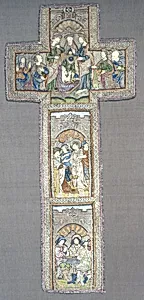
Medium
Linen, two layers of plain weave; embroidered with silk, linen, wool, gilt- and silvered-animal-substrate-wrapped linen, and gilt-metal-strip-wrapped linen in satin, single satin, and split stitches; laid work and couching; gilt-metal-strip-wrapped silk and silk, plain weave extended weft uncut fringe; lined with linen, plain weave; glazed; edged with silk
Dimensions
122.4 × 57.2 cm (48 1/4 × 22 1/2 in.)
Classification
textile
Department
Textiles
Museum
Art Institute of Chicago
Accession Number
133753
Rights
Public Domain
Art Historical Context
Behold the *Orphrey Cross*, a stunning ecclesiastical textile from around 1525, crafted by an unknown artisan. Measuring an impressive 122.4 × 57.2 cm, this cross-shaped panel was designed as an orphrey—a richly decorated band adorning the front of clerical vestments like chasubles during Catholic liturgies. Dating to the early 16th century, it reflects the opulent textile traditions of Renaissance Europe, where such pieces symbolized spiritual devotion and the Church's grandeur. What sets this artwork apart is its masterful embroidery on a two-layer linen foundation. Skilled hands employed silk, linen, wool, and extravagant gilt- and silvered-metal-wrapped threads in techniques like satin stitch, split stitch, laid work, and couching. Delicate fringes of extended weft silk add movement, while a glazed linen lining and silk edging ensure durability and elegance. These methods highlight the era's technical prowess, transforming humble fabric into a shimmering jewel. Housed in the Art Institute of Chicago's Textiles Department, the *Orphrey Cross* offers a window into 16th-century craftsmanship, where embroidery rivaled painting in prestige. Its preservation invites us to appreciate the anonymous makers whose intricate work elevated religious ritual into art.
About the Artist
Unknown
The artist designated as "Unknown" in our virtual museum's collection exemplifies a poignant chapter in art history: creators whose identities have faded into obscurity despite the enduring power of their work. With only one known artwork attributed to them in our holdings, this figure represents countless anonymous hands that shaped visual culture across centuries. Museums worldwide, including th...