
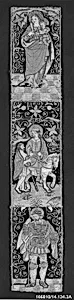
Orphrey (one of a pair)
Unknown Artist
17th century
Medium
Silk and metal thread
Dimensions
L. 40 x W. 7 inches (101.6 x 17.8 cm)
Classification
Textiles-Embroidered
Culture
Spanish
Department
European Sculpture and Decorative Arts
Museum
Metropolitan Museum of Art, New York, NY
Credit
Frederick C. Hewitt Fund, 1914
Accession Number
14.134.3a
Rights
Public Domain
Tags
Art Historical Context
This exquisite 17th-century Spanish orphrey, one of a pair, is a narrow embroidered band crafted from silk and metal threads, measuring 40 x 7 inches. Orphreys like this were prized decorative elements sewn onto ecclesiastical vestments, such asasubles worn by priests during Mass, adding splendor to religious ceremonies. Produced in Spain during the height of the Baroque era, it reflects the era's opulent textile traditions, where embroidery served both spiritual and artistic purposes. The design features the iconic Madonna and Child alongside horses, blending tender religious devotion with dynamic animal motifs. The use of shimmering metal threads—likely gold or silver—creates a luminous effect, mimicking the glow of sacred icons under candlelight in dimly lit churches. This technique, known as opus Anglicanum-inspired embroidery but adapted in Spanish workshops, demanded masterful skill to interweave fine silk with metallic filaments for texture and durability. Housed in the Metropolitan Museum of Art's European Sculpture and Decorative Arts department (acquired via the Frederick C. Hewitt Fund in 1914), this piece offers a window into Counter-Reformation Spain, where lavish church adornments reinforced Catholic faith amid religious fervor. Visitors will appreciate its tactile beauty, evoking the vibrant workshops where anonymous artisans wove devotion into every stitch.