
Ostrakon
Unknown Artist
7th century
Medium
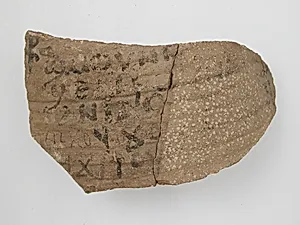
Pottery fragment with ink inscription
Dimensions
4 7/16 x 2 3/4 in. (11.3 x 7 cm)
Classification
Ceramics
Culture
Coptic
Department
Medieval Art
Museum
Metropolitan Museum of Art, New York, NY
Credit
Rogers Fund, 1912
Accession Number
12.180.197
Rights
Public Domain
Tags
Art Historical Context
This unassuming *Ostrakon* from 7th-century Coptic Egypt offers a fascinating glimpse into daily life in early Christian North Africa. Crafted as pottery fragment—measuring just 4 7/16 x 2 3/4 inches—this humble medium bears an ink inscription, transforming discarded shards into practical writing surfaces. In Coptic culture, which blended Egyptian traditions with Christianity after the 4th century, ostraka were ubiquitous when papyrus was scarce, for everything from letters and accounts to prayers and school exercises. Its historical significance lies in preserving the voices of ordinary people during a transformative era, as Egypt transitioned from Byzantine rule to early Islamic governance around the 7th century. Classified as a ceramic document in the Metropolitan Museum of Art's Medieval Art collection (acquired via Rogers Fund in 1912), it exemplifies Coptic script—a stylized Greek-derived alphabet that encoded religious texts, magic spells, and bureaucracy. Though the artist remains unknown, the simple ink technique highlights resourcefulness and widespread literacy among monks, scribes, and villagers. Today, such artifacts illuminate Coptic artistry's blend of utility and devotion, reminding us that grand history often hides in everyday scraps. A testament to resilience, this ostrakon invites you to ponder the stories etched on its weathered surface.