
Ostrakon with Lines from Homer's Iliad
Unknown Artist
600
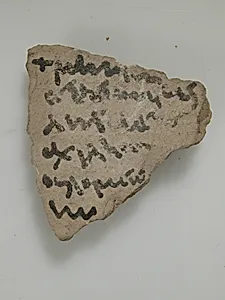
Medium
Limestone with ink inscription
Dimensions
1 9/16 x 1 11/16 in. (4 x 4.3 cm)
Classification
Stone-Ostraca
Culture
Coptic
Department
Medieval Art
Museum
Metropolitan Museum of Art, New York, NY
Credit
Rogers Fund, 1914
Accession Number
14.1.139
Rights
Public Domain
Tags
Art Historical Context
Nestled in the Metropolitan Museum of Art's Medieval Art collection, this unassuming ostrakon—a small limestone fragment measuring just 4 x 4.3 cm—offers a poignant glimpse into everyday literacy in Coptic Egypt around 600 AD. Inked with lines from Homer's *Iliad*, this tiny artifact from an unknown scribe captures verses from the epic tale of the Trojan War, blending classical Greek literature with the Christian-era culture of late antique Egypt. Ostraca like this one were ubiquitous writing surfaces in ancient and early medieval Egypt, made from broken pottery or limestone shards that were cheap, abundant, and practical for notes, school exercises, accounts, or literary copies. The use of Homer here highlights the enduring influence of Greek classics in Coptic society, where education often preserved pagan texts alongside emerging Christian ones. This piece, acquired through the Rogers Fund in 1914, underscores cultural continuity from the Hellenistic world into the Byzantine period. Its modest ink inscription technique—simple yet precise—exemplifies functional artistry, prioritizing content over ornament. For visitors, it evokes the human touch of a scribe poring over epic poetry by lamplight, bridging antiquity and the medieval era in a single, handheld relic.