
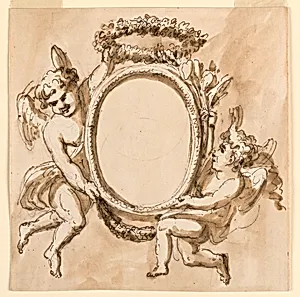
Oval frame supported by two angels
1775–1790
Classification
architecture
Department
Smithsonian Collection
Museum
Smithsonian American Art Museum
Credit
Museum purchase through gift of various donors and from Eleanor G. Hewitt Fund
Accession Number
1938-88-1839
Rights
Public Domain
About this artwork
Research in Progress
Art Historical Context
**Oval Frame Supported by Two Angels***Giuseppe Barberi (, 1746–1809), ca. 1775–1790* Crafted by the esteemed Italian architect and designer Giuseppe Barberi during the late18th century, thisOval Frame Supported by Angels* exemplifies the ornate decorative arts of Rome's vibrant artistic scene. Barberi, amid the transition from Rococo exuberance to Neoclassical restraint, specialized in architectural ornamentation. The piece, classified as architecture, likely as a sculptural element or model for framing portraits, altarpieces, or grand interiors, with ethereal angels bearing an elegant oval form—a motif evoking divine support and classical harmony. Dating to 1775–1790, it captures Italy's Enlightenment-era fascination with antiquity, where mythical figures like angels blended Baroque playfulness with emerging neoclassical purity. Acquired through museum purchase and the Eleanor G. Hewitt Fund, it now graces the Smithsonian American Art Museum, highlighting transatlantic appreciation for European design. Though research continues, this work invites us to ponder Barberi's skill in merging whimsy and structure, a testament to the era's opulent patronage. (178 words)