
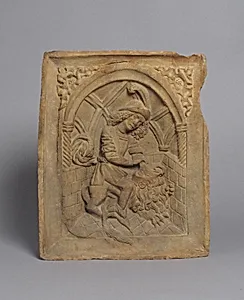
Oven Tile with Samson and the Lion (Based on an Engraving by Master E.S.)
Unknown Artist
ca. 1490
Medium
Unglazed Earthenware (terra cotta)
Dimensions
Overall: 9 7/8 x 8 1/8 x 2 11/16in. (25.1 x 20.6 x 6.8cm)
Classification
Ceramics
Culture
Austrian
Department
The Cloisters
Museum
Metropolitan Museum of Art, New York, NY
Credit
Gift of Ruth Blumka, in honor of Michel David-Weill, 1992
Accession Number
1992.176
Rights
Public Domain
Tags
Art Historical Context
This charming oven tile from around 1490, crafted by an unknown Austrian artist, captures the dramatic biblical scene of Samson wrestling a lion. Based on an engraving by the 15th-century German printmaker Master E.S., it showcases Samson's heroic strength as he tears apart the beast—a popular motif symbolizing divine power and triumph over adversity. Made of unglazed earthenwareterra cotta), the measures about 10 by 8 inches and was designed for practical use in home stoves, where its porous surface efficiently absorbed and radiated heat. In late medieval Austria, such ceramic tiles transformed everyday hearths into artistic displays, blending functionality with religious storytelling. Unglazed terra cotta was ideal for these high-heat environments, allowing mass production via molds while preserving fine details from engraved models like Master E.S.'s work. This piece reflects the era's growing access to printed imagery, which democratized sophisticated designs for domestic settings. Today, housed in The Cloisters at The Metropolitan Museum of Art, this tile offers a glimpse into Northern European ceramic traditions and the cultural reverence for biblical narratives in daily life. A gift honoring collector Michel David-Weill, it invites us to appreciate how art warmed both body and spirit.