
Paarden-geld
Medium
nishikie, with metallic pigments, blindprinting and tsuyazuri
Dimensions
183; 216
Rights
Public Domain
About this artwork
J.A. Bierens de Haan Bequest, Amsterdam
Art Historical Context
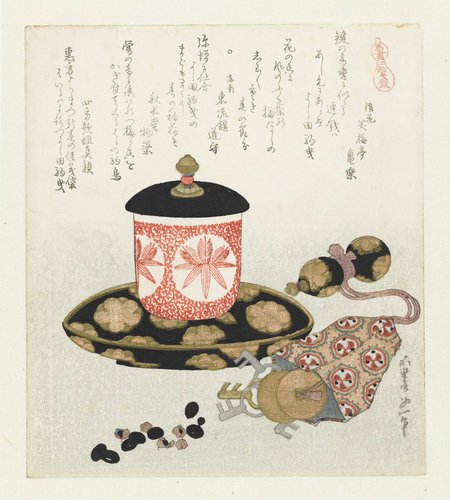
Katsushika Hokus's *Paarden-geld* (1822) is a captivating example of ukiyo-e, the "pictures of the floating world" that defined Japan's Edo-period print culture. At just 216mm by 183, this intimate woodblock print showcases Hokusai's mastery his prolific middle years, when he was revolutionizing the genre with dynamic compositions and vivid imagery. Likely a surimono—a luxurious, privately commissioned print—the title evokes themes of horses and currency, blending everyday life with whimsy in the bustling urban world of 19th-century Japan. Rendered in nishikie ("brocade picture") technique, it bursts with color from layered woodblocks, enhanced by shimmering metallic pigments for a jewel-like glow. Hokusai employs advanced methods like blindprinting, which creates subtle embossed textures without ink, and tsuyazuri, adding glossy highlights that mimic lacquer's sheen. These innovations elevated ukiyo-e from mass-produced ephemera to collector's treasures, influencing global art, including Impressionists like Monet. Today, *Paarden-geld* graces collections as part of the J.A. Bierens de Haan Bequest in Amsterdam, a testament to the print's journey from Edo Japan to European admiration. It invites us to ponder Hokusai's enduring legacy: at over 30,000 works, his genius captured fleeting beauty with timeless precision.
About the Artist
Katsushika Hokusai · 1760–1849
Katsushika Hokusai (1760-1849) stands as one of history's most influential artists, a Japanese master who revolutionized the ukiyo-e woodblock print tradition and profoundly shaped Western art. Born in the Katsushika district of Edo (modern-day Tokyo) to an artisan family, Hokusai lived through nearly nine decades of extraordinary creative evolution, adopting over thirty different artistic names t...