
A Lacquer Bowl
ca. 1815 - ca. 1820
Medium
nishikie, with metallic pigments, blindprinting and tsuyazuri
Dimensions
197; 167
Rights
Public Domain
About this artwork
height 197 mm x width 167 mm
Art Historical Context
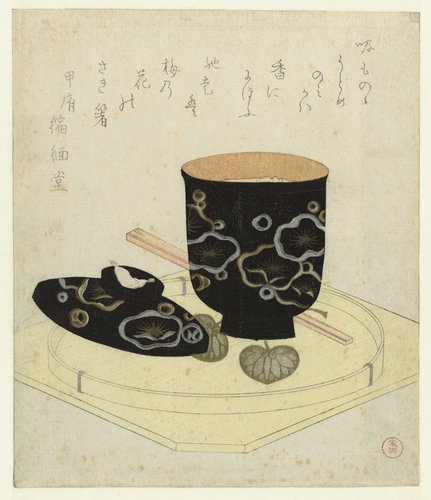
Step into the refined world of Edo-period Japan with *A Lacquer Bowl* by Kubota Shunman created around 1815–1820. Shunman (1779–1845), a versatile ukiyo-e artist poet, masterfully captured the elegance of lacquerware in this compact woodblock print, measuring just 197 mm high by 167 mm wide.ed in the vibrant *nishikie* stylemeaning "brocade"—it showcases the floating world (*ukiyo-e*) tradition of celebrating beauty, craftsmanship, and everyday luxury. What elevates this work is Shunman's innovative use of advanced printing techniques. Metallic pigments lend a shimmering realism, while blindprinting (*gauffrage*) adds subtle embossed textures, evoking the tactile depth of actual lacquer. The *tsuyazuri* method creates glossy highlights, brilliantly mimicking the polished sheen of urushi lacquer bowls prized in Japanese culture. These effects pushed woodblock printing to rival high-end decorative arts, blending accessibility with opulence. During Japan's late Edo era, such prints often served as *surimono*—custom commissions for poetry circles or New Year's gifts—highlighting Shunman's fusion of art and literature. This piece invites us to appreciate how ukiyo-e democratized elite aesthetics, preserving a snapshot of cultural refinement amid rapid urbanization.