
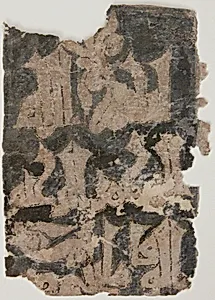
Page of Calligraphy
Unknown Artist
10th–early 11th century
Medium
Ink on paper
Dimensions
H. 6 in. (15.2 cm) W. 4 1/4 in. (10.8 cm)
Classification
Codices
Department
Islamic Art
Museum
Metropolitan Museum of Art, New York, NY
Credit
Gift of Nelly, Violet and Elie Abemayor, in memory of Michel Abemayor, 1978
Accession Number
1978.546.40
Rights
Public Domain
Tags
Art Historical Context
This exquisite *Page of Calligraphy* the 10th to early 11th century the pinnacle of Islamic manuscript arts during the Abbasid era, a time when Baghdad flourished as a center of learning and culture. Crafted by an unknown master calligrapher, this small leaf—measuring just 6 by 4¼ inches—was part of a codex, a religious or literary text such as the Quran. Ink on paper, a medium perfected in the Islamic world, allowed for intricate scripts that conveyed spiritual and intellectual depth without figurative imagery, adhering to aniconic traditions. The artistry lies in the precise, flowing lines of ink, possibly in an early Kufic or transitional script, where angular forms evolved into more fluid styles. Calligraphy was revered as the noblest art in Islamic culture, symbolizing divine harmony and the written word's power. Its modest size suggests it was designed for intimate study or recitation, highlighting the era's emphasis on portability and reverence for the book. Today, this fragile treasure resides in the Metropolitan Museum of Art's Islamic Art Department, a gift honoring Michel Abemayor. It invites visitors to appreciate how calligraphy bridged faith, scholarship, and beauty across centuries.