
Pair of candelabra
Unknown Artist
ca. 1770–80
Medium
Gilt bronze, marble, ebony
Dimensions
Overall (each, wt. confirmed): 27 3/4 × 15 in., 51 lb. (70.5 × 38.1 cm, 23.1 kg)
Classification
Metalwork-Gilt Bronze
Culture
British
Department
European Sculpture and Decorative Arts
Museum
Metropolitan Museum of Art, New York, NY
Credit
Purchase, Morris Loeb Bequest, 1959
Accession Number
59.128.1a, b, .2a, b
Rights
Public Domain
Tags
Art Historical Context
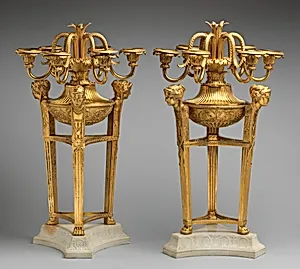
Step into the opulent world of late 18th-century British interiors with this exquisite pair of gilt bronze candelabra crafted around 1770–80. Standing at nearly 28 inches tall and weighing over 50 pounds each, these grand pieces combine gilded bronze for their shimmering branches and scrolling arms with marble and ebony bases, ev the lavish decorative arts of the Georgian era. The unknown British artisan masterfully employed techniques like casting, chasing, and mercury gilding to achieve a radiant, durable finish, perfect for illuminating aristocratic drawing rooms or dining halls. These candelabra exemplify the neoclassical taste emerging in Britain during George III's reign, blending functional lighting with sculptural flair—note the prominent "heads" likely rendered as classical masks or busts, a nod to ancient Roman and Greek motifs revived through Enlightenment scholarship. As status symbols for the elite, they highlight Britain's growing mastery of luxury metalwork, influenced by French Huguenot silversmiths and Grand Tour souvenirs. Acquired by The Metropolitan Museum of Art in 1959 through the Morris Loeb Bequest, they remain treasures of European decorative arts, inviting us to imagine candlelit soirées in grand country estates.