
Pair of Double-Barrel Flintlock Pistols
c. 1730
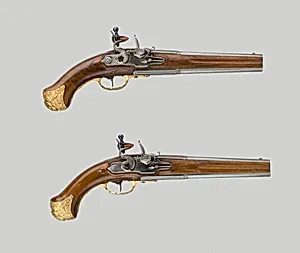
Medium
Steel, gilt bronze
Dimensions
L. 38.7 cm (15 1/4 in.) Barrel L. 22.8 cm (9 in.) Wt. 1 lb. 15 oz. Caliber .45
Classification
firearm-handgun
Department
Applied Arts of Europe
Museum
Art Institute of Chicago
Accession Number
116565
Rights
Public Domain
Art Historical Context
These elegant Pair of Double-Barrel Flintlock Pistols, crafted around 1730 by an unknown European artisan, exemplify the fusion of deadly functionality and luxurious craftsmanship in 18th-century applied arts. Made of steel with gilt bronze mounts, each pistol measures about 15¼ inches long with 9-inch barrels, weighing just under two pounds and chambered in .45 caliber. The double-barrel design allowed two shots before reloading, a practical advantage in an era when personal firearms served as both self-defense tools and symbols of status. Flintlock mechanisms, which struck flint against steel to ignite gunpowder, dominated European firearms from the late 17th through the early 19th centuries. Pistols like these were often produced in matching pairs for wealthy patrons, blending utility with ostentatious display. The gilt bronze embellishments—likely including ornate fittings and decorative elements—highlight the period's taste for opulence, transforming weapons into objects of art suitable for collectors or as diplomatic gifts. Housed in the Art Institute of Chicago's Applied Arts of Europe collection, these pistols reflect how 18th-century gunsmiths elevated metalworking to high art. Their survival as a complete pair offers visitors a glimpse into the technical ingenuity and aesthetic refinement of pre-industrial Europe, where even instruments of conflict were adorned with gold-toned elegance.
About the Artist
Unknown
The artist designated as "Unknown" in our virtual museum's collection exemplifies a poignant chapter in art history: creators whose identities have faded into obscurity despite the enduring power of their work. With only one known artwork attributed to them in our holdings, this figure represents countless anonymous hands that shaped visual culture across centuries. Museums worldwide, including th...