
Pair of hand screens
Unknown Artist
first quarter 18th century
Medium
Silk and wool on canvas
Dimensions
Each: H. 11 1/2 x W. 9 3/4 inches (29.2 x 24.8 cm)
Classification
Textiles-Embroidered
Culture
British
Department
European Sculpture and Decorative Arts
Museum
Metropolitan Museum of Art, New York, NY
Credit
Gift of Irwin Untermyer, 1964
Accession Number
64.101.1342, .1343
Rights
Public Domain
Tags
Art Historical Context
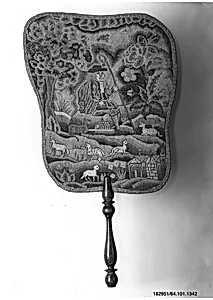
These exquisite pair of hand screens, crafted in Britain during the first quarter of 18th century, the refined artistry of embroidered textiles from the Georgian era. Measuring just 11½ by 9¾ inches each, these petite objects were designed for personal use, likely by gentlewomen to shield delicate complexions from fireplace heat or sunlight during social gatherings. Their small scale and portability made them cherished accessories in fashionable households, blending functionality with decorative elegance. Embroidered with vibrant silk and wool threads on a canvas ground, the screens feature lively motifs of animals, men, women, and flowers—common pastoral scenes that evoked the bucolic charm of British countryside life. This technique, known as crewelwork, was a hallmark of early 18th-century English embroidery, often executed by skilled amateurs or professionals in homes. The use of natural dyes and textured stitches created depth and realism, showcasing the era's growing appreciation for naturalistic designs inspired by imported Indian chintz and botanical illustrations. As part of the Metropolitan Museum of Art's European Sculpture and Decorative Arts collection—generously gifted by Irwin Untermyer in 1964—these screens offer a glimpse into domestic refinement and women's creative contributions to British decorative arts. They highlight how everyday objects became canvases for storytelling and leisure pursuits in an age of expanding trade and leisure.