
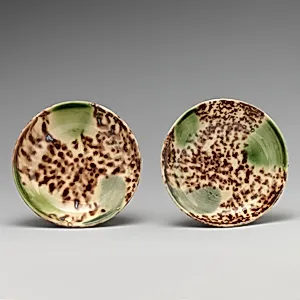
Pair of miniature dishes
ca. 1760
Medium
Lead-glazed earthenware
Dimensions
Each: 3/4 × 3 3/16 in. (1.9 × 8.1 cm)
Classification
Ceramics-Pottery
Culture
British, Staffordshire
Department
European Sculpture and Decorative Arts
Museum
Metropolitan Museum of Art, New York, NY
Credit
Gift of Dr. and Mrs. A. L. Garbat, 1961
Accession Number
61.107.119, .120
Art Historical Context
These exquisite pair of miniature dishes, in the "Whieldon type" 1760, hail from the bustling potteries of Staffordshire, England cradle of British ceramic innovation during the Georgian era. Thomas Whieldon, a potter active in the mid-18th century, his name to this distinctive style of lead-glazed earthenware, for its vibrant, mottled glazes that mimicked pricier porcelain or Oriental wares. At just 3/4 × 3 3/16 inches each, these delicate pieces showcase the miniaturist's art, likely intended for dollhouses, children's toys, or ornamental displays, blending whimsy with technical prowess. Th...
About the Artist
Whieldon type
**Whieldon Type: Pioneers of Colorful Staffordshire Earthenware** Whieldon type pottery represents the work of anonymous Staffordshire potters active in Britain during the mid-18th century, roughly 1740–1770, who produced innovative lead-glazed earthenwares that brought vibrant color and whimsy to everyday tableware and ornaments. Emerging from the fertile pottery district of Staffordshire, these...