
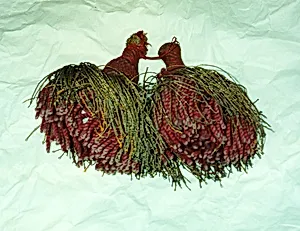
Pair of tassels
Unknown Artist
17th–19th century
Medium
cotton; metal.
Dimensions
14 1/2 x 9 cm ( 5 3/4 x 3 5/8 in)
Classification
Textiles-Miscellaneous
Culture
European
Department
Robert Lehman Collection
Museum
Metropolitan Museum of Art, New York, NY
Credit
Robert Lehman Collection, 1975
Accession Number
1975.1.2433a,b
Rights
Public Domain
Art Historical Context
This exquisite pair of tassels, from cotton and metal between the 17th and 19th centuries, exemplifies refined artistry of European textile traditions. Measuring just 14½ × 9 cm (5¾ × 3⅝ in.), these small yet intricate ornaments likely served as decorative accents on furnishings, garments, or ceremonial items, blending soft cotton fibers with shimmering metal elements for texture and luxury. The anonymous maker's skill highlights the era's emphasis on opulent embellishments, where tassels added elegance and movement to everyday opulence. Spanning Baroque, Rococo, and early modern periods, such textiles reflect Europe's evolving tastes in domestic and personal adornment. Cotton provided a lightweight, durable base, while metal—possibly gilded threads or beads—introduced a precious gleam, bridging utilitarian craft with high-status display. As part of the Robert Lehman Collection at The Metropolitan Museum of Art (acquired 1975), these tassels offer a glimpse into overlooked "miscellaneous" textiles that enriched interiors and wardrobes across centuries. Though modest in scale, they underscore the cultural importance of such objects in European life, preserving the tactile artistry of forgotten hands. Visitors, imagine them swaying on a velvet curtain or military sash—timeless touches of splendor!