
Pair of Vases
Unknown Artist
19th century
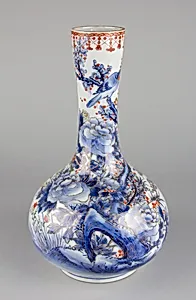
Medium
White porcelain with decoration in blue under the glaze, enamel, iron red and gold
Dimensions
Overall (a): H. 13 in. (33 cm); Diam. 7 3/4 in. (19.7 cm) Overall (b): H. 13 1/16 in. (33.2 cm); Diam. 7 1/2 in. (19.1 cm)
Classification
Ceramics
Culture & Period
Japan · Edo (1615–1868) or Meiji period (1868–1912)
Department
Asian Art
Museum
Metropolitan Museum of Art, New York, NY
Credit
Bequest of Margarette A. Jones, 1906
Accession Number
07.233.26a, b
Rights
Public Domain
Tags
Art Historical Context
These elegant pair of vases, crafted in 19th-century Japan during the late Edo (1615–1868) or early Meiji (8–1912) period, exemplify the exquisite porcelain traditions of the time. Standing about 13 inches tall with gently flared mouths, they feature a pristine white body adorned with vibrant motifs of birds amid blooming flowers and lush leaves. The decorations, rendered in blue under the glaze for enduring brilliance, are enriched with overglaze enamels, iron red, gold, creating a luxurious polychrome effect that catches the light beautifully. Japanese porcelain makers, particularly from kilns in Arita (known for Imari wares), mastered these techniques in the 17th century and refined them by the 19th, blending underglaze cobalt blue—fired at high temperatures for permanence—with cooler overglaze colors added afterward. This dual process allowed for intricate, colorful designs symbolizing nature's harmony, seasonal renewal, and good fortune, motifs deeply rooted in Japanese aesthetics and often destined for export to the West. A generous bequest to the Metropolitan Museum of Art in 1906, these vases offer a window into Japan's artistic export boom during the Meiji era, when such opulent ceramics captivated global collectors. Pause to admire how the birds seem poised to take flight among the petals—a timeless celebration of beauty and craftsmanship.