
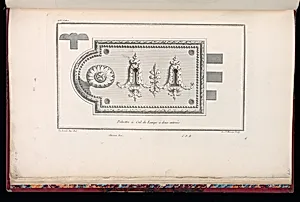
Palastre à Cul de Lampe à deux entrées
Classification
Department
Smithsonian Collection
Museum
Smithsonian American Art Museum
Credit
Purchased for the Museum by the Advisory Council
Accession Number
1921-6-330-139
Rights
Public Domain
About this artwork
Research in Progress
Art Historical Context
Visitors to the Smithsonian American Art Museum are invited to discover *Palastre à Cul depe à deux entrées a captivating print by French artist Richard de Lalonde, between 1780 and 1796. Created sometime between 177 and 1788, this work the refined elegance of late 18th-century France, a period when neoc influences were blending with lingering rococo ornamentation. Purchased for the by the Advisory Council, belongs to the Smithsonian Collection highlights the institution's interest in European prints that influenced global design. a print, the artwork the era's innovative reproductive techniques, intricate architectural details to be widely shared among architects, decorators and collectors. The evocative title—"Palastre à Cul de Lampe à deux entrées"—suggests a decorative architectural feature, likely a console or ornamental support ("cul de lampe") integrated into a palatial structure with dual entrances. Lalonde, known for his precise engravings of ornamental motifs and fantastical designs, captured the opulence of pre-Revolutionary France, where such prints served as inspirational blueprints for grand interiors and facades. Though research continues, this piece offers a window into the cultural sophistication of Louis XVI-era France, bridging art and architecture in a single, elegant sheet. Pause to imagine it adorning a designer's studio, sparking visions of symmetrical grandeur.