
回文歌 京 大阪 江戸|Palindromic Poems (Kaibunka): Kyo
ca. 1768
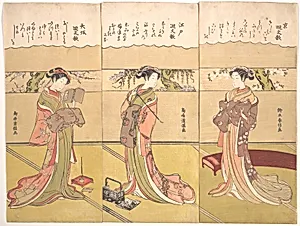
Medium
Right-hand sheet of a triptych of woodblock prints; ink and color on paper
Dimensions
12 3/8 x 5 3/8 in. (31.4 x 13.7 cm)
Classification
Prints
Culture & Period
Japan · Edo period (1615–1868)
Department
Asian Art
Museum
Metropolitan Museum of Art, New York, NY
Credit
Fletcher Fund, 1929
Accession Number
JP1504
Rights
Public Domain
Tags
Art Historical Context
Suzuki Harunobu's *Palindromic Poems (ibunka): Kyo*, created around 1768, is the right-hand sheet of a charming triptych woodblock print from Japan's Edo period (16151868). This vibrant work features *kaibunka*—clever palindromic poems that read the same forwards and—celebrating the bustling cities of Kyoto, Osaka, and Edo. The "Kyo" sheet focuses on Kyoto, weaving poetry with delicate imagery of women and actors, evoking the lively urban culture of the time. Harunobu, a pioneering ukiyo-e artist, revolutionized printmaking with his innovative use of full-color *nishiki-e* (brocade pictures), layering ink and pigments on paper for luminous effects. His style emphasized graceful *bijin-ga* (pictures of beautiful women) and theatrical scenes, blending elegance with everyday pleasures. At just 12 3/8 x 5 3/8 inches, this intimate format was designed for personal appreciation, reflecting the democratic appeal of woodblock prints during Edo's golden age of entertainment. Culturally, the artwork captures the playful word games popular among literati and commoners alike, merging visual beauty with linguistic wit. Housed in the Metropolitan Museum of Art's Asian Art collection (Fletcher Fund, 1929), it offers a window into 18th-century Japan's sophisticated fusion of poetry, performance, and print artistry.
About the Artist
Suzuki Harunobu · 1725–1770
Suzuki Harunobu (c. 1725-1770) was a Japanese ukiyo-e artist who revolutionized woodblock printing by developing nishiki-e—full-color prints using multiple woodblocks—in 1765. Before Harunobu, Japanese prints were limited to two or three colors; his innovation unleashed the entire artist's palette, transforming ukiyo-e into the vibrant art form that would later captivate Western artists from Manet...