
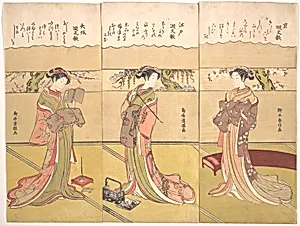
Palindromic Poems (Kaibunka): Osaka
ca. 1768
Medium
Left sheet of a triptych of woodblock prints; ink and color on paper
Dimensions
12 3/8 x 5 3/8 in. (31.4 x 13.7 cm)
Classification
Prints
Culture & Period
Japan · Edo period (1615–1868)
Department
Asian Art
Museum
Metropolitan Museum of Art, New York, NY
Credit
Fletcher Fund, 1929
Accession Number
JP1503
Rights
Public Domain
Tags
Art Historical Context
**Palindromic Poems (Kaunka): Osaka***Torii Kiyotsune, ca. 1768* *Left sheet of a tript; ink and color on paper, 12 3/8 x 5 3/8 in. (31.4 x 13.7 cm)* *Metropolitan Museum Art, Fletcher Fund, 1929* Step into the vibrant world of-period Japan with this exquisite woodblock print by Torii Kiyotsune a master of the Torii school renowned for its lively depictions of theater actors and beautiful women (bijin-ga). Created around 1768 during the flourishing ukiyo-e tradition—"pictures of the floating world"—this left sheet of a triptych captures the playful elegance of *kaibunka*, palindromic poems that read the same forwards and backwards. Set in Osaka, a bustling hub of commerce, kabuki theater, and pleasure districts, the print likely features graceful women reciting or displaying these clever verses, blending poetry with visual allure. Woodblock printing techniques shine here: intricate carving allowed for bold colors and fine lines, with mica or pigments adding subtle shimmer to fabrics and skin. The compact size suited urban collectors, who prized such affordable luxuries amid Japan's rigid samurai society. *Kaibunka* poems were a literary fad, showcasing wit and wordplay popular among the merchant class, making this artwork a snapshot of cultural sophistication. As part of the Metropolitan Museum's Asian Art collection, it highlights women's roles in Edo entertainment culture, inviting us to ponder the artistry of ephemera that once adorned teahouses and homes. A delightful fusion of poetry, printmaking, and urban life! (218 words)
About the Artist
Torii Kiyotsune · 1757–1779
Japanese, active ca. 1757–1779