
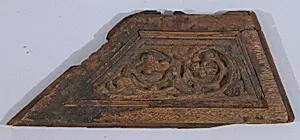
Panel
Unknown Artist
dated 1296
Medium
Wood; carved and inlaid
Dimensions
Ht. 3 1/4 in. (8.2 cm) W. 7 3/4 in. (19.7 cm) D. 5/8 in. (1.6 cm)
Classification
Wood
Department
Islamic Art
Museum
Metropolitan Museum of Art, New York, NY
Credit
Rogers Fund, 1907
Accession Number
07.236.51
Rights
Public Domain
Art Historical Context
This exquisite wooden panel, dated 1296, hails from the Islamic world during the late 13th century—a time of flourishing craftsmanship under the Mamlukate in Egypt and Syria Measuring just 3¼ inches high and 7¾ inches wide, its modest dimensions belie the intricate artistry packed into such a compact form. Crafted from wood, it features delicate carving combined with inlay techniques, where contrasting materials like ivory, bone, or mother-of-pearl were to create shimmering patterns, a hallmark of Islamic decorative arts. The panel's carved and inlaid surface likely showcases the geometric and arabesque motifs prized in Islamic design, symbolizing infinity and divine order while adhering to aniconic traditions that avoid human or animal figures. These techniques demanded exceptional skill, as artisans meticulously chiseled recesses and fitted inlays for a seamless, luminous effect, often adorning mosque doors, pulpits, or elite furniture. Acquired through the Rogers Fund in 1907 and now in the Metropolitan Museum of Art's Islamic Art Department, this anonymous masterpiece offers a window into medieval Islamic aesthetics—elegant, precise, and enduring. Visitors can marvel at how such small-scale wonders illuminated grand architectural settings, blending utility with spiritual beauty.