
Panel
Unknown Artist
13th century
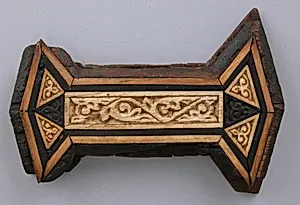
Medium
Wood; carved, inlaid with plain and carved ivory
Dimensions
Ht. 5 1/16 in. (12.8 cm) W. 3 7/16 in. (8.8 cm) D.11/16 in. (1.7 cm)
Classification
Wood
Department
Islamic Art
Museum
Metropolitan Museum of Art, New York, NY
Credit
Rogers Fund, 1907
Accession Number
07.236.79
Rights
Public Domain
Art Historical Context
This delicate 13th-century carved wood panel, inlaid with both plain and intricately carved ivory, exemplifies refined craftsmanship of Islamic art from the medieval Islamic world. Measuring just over 5 inches high and3.5 inches wide, its petite scale suggests it may have adorned a small furniture piece, casket, or architectural element, where such luxury materials conveyed status and piety. Acquired by The Metropolitan Museum of Art through the Rogers Fund in 190, it now resides in the museum's Islamic Art department, offering a window into an era of cultural flourishing. The technique of wood carving combined with ivory inlay—known as *tarsia* or marquetry in Islamic traditions—highlights extraordinary artisanal skill. Artisans meticulously cut and fitted ivory pieces into recessed wood channels, creating luminous contrasts and intricate patterns that often evoked geometric motifs, arabesques, or calligraphy symbolic of paradise gardens. This labor-intensive process, popular in regions like Egypt, Syria, and Iraq during the 13th century, reflected the era's advancements in trade and technology, with ivory sourced from distant lands like Africa or India. Though the artist remains unknown, this panel's preservation speaks to the enduring legacy of Islamic decorative arts, blending functionality with spiritual beauty. Visitors are invited to marvel at its tactile elegance up close, a testament to the anonymous masters who elevated everyday wood into timeless treasure.