
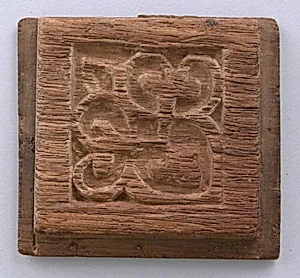
Panel
Unknown Artist
14th–15th century
Medium
Wood; carved
Dimensions
Ht. 2 5/8 in. (6.6 cm) W. 2 1/2 in. (6.3 cm) D. 1/2 in. (1.2 cm)
Classification
Wood
Department
Islamic Art
Museum
Metropolitan Museum of Art, New York, NY
Credit
Rogers Fund, 1907
Accession Number
07.236.90
Rights
Public Domain
Tags
Art Historical Context
This exquisite carved wooden panel, dating to the 14th–15th century, hails from the Islamic world and exemplifies the refined artistry of that era. Measuring just 2⅝ × 2½ inches, its petite scale belies its intricate craftsmanship, likely intended as a decorative element in architecture—perhaps part of a larger screen, door, or furniture inlay. Acquired through the Rogers Fund in 7, it now graces the Metropolitan Museum of Art's of Islamic Art, offering a window into medieval Islamic design traditions. Carved wood was a prized medium in Islamic architecture and interiors, where artisans skillfully transformed humble timber into surfaces alive with geometric patterns, floral motifs, or calligraphic flourishes. Though the artist remains unknown, the panel's low relief carving technique highlights the precision and patience required, often achieved with chisels and gouges to create depth and shadow play. Such pieces adorned mosques, palaces, and madrasas, blending functionality with spiritual symbolism in cultures from the Mamluk sultanate to Timurid realms. For visitors, this tiny treasure invites close inspection, revealing how Islamic art elevated everyday materials into transcendent beauty. Its survival speaks to the enduring legacy of woodwork as a portable yet monumental art form, bridging the domestic and the divine.