
Panel
Unknown Artist
14th–15th century
Medium
Wood or ivory
Dimensions
Max H. 1 1/8 in. (2.9 cm) Max W. 3 5/16 in. (8.4 cm) D. 1/4 in. (0.6 cm) Wt. 0.52 oz. (14.743 g)
Classification
Wood
Department
Islamic Art
Museum
Metropolitan Museum of Art, New York, NY
Credit
Rogers Fund, 1907
Accession Number
07.236.125
Rights
Public Domain
Art Historical Context
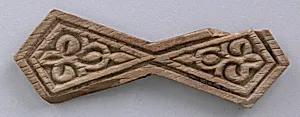
This delicate panel, crafted by an unknown artist in the 14–15th century, the refined artistry of Islamic decorative traditions. Measuring just 1 1/8 inches high and 3 5/16 inches wide, with a slender depth of 1/4 inch and weighing a mere 0.52, it is a remarkably small object, likely intended as an inlay or embellishment for furniture, boxes, or architectural elements. Made of wood—possibly incorporating ivory—the panel reflects the exquisite precision of artisans from the Islamic world during the medieval period, a time when Mamluk Egypt, Timurid Persia, and other centers flourished with intricate craftsmanship. In the Department of Islamic Art at The Metropolitan Museum of Art, acquired through the Rogers Fund in 1907, this piece highlights the cultural importance of portable luxury goods in Islamic societies. Such panels often featured geometric patterns, arabesques, or calligraphy, showcasing technical mastery in carving and inlay techniques that symbolized spiritual harmony and mathematical sophistication. Though its precise origin and decoration remain enigmatic, it invites visitors to appreciate the portability and intimacy of Islamic art, bridging everyday objects with profound aesthetic and religious ideals. (198 words)