
Panel
Unknown Artist
18th century
Medium
Linen, silk; embroidered
Dimensions
H. 24 1/4 in. (61.6 cm) W. 13 3/4 in. (34.9 cm)
Classification
Textiles-Embroidered
Department
Islamic Art
Museum
Metropolitan Museum of Art, New York, NY
Credit
The Grinnell Collection, Bequest of William Milne Grinnell, 1920
Accession Number
20.120.272
Rights
Public Domain
Art Historical Context
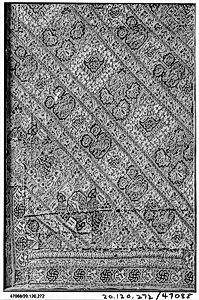
This delicate embroidered panel, crafted in the 18th by an unknown artist, the refined artistry of Islamic textile traditions. Measuring 24¼ by 13¾ inches, it is made from linen ground fabric adorned with luxurious silk threads, a combination that highlights the period's mastery of materials. Such panels were often used as decorative elements in homes, garments, or furnishings, reflecting the Islamic world's emphasis on beauty in everyday life. Embroidered like this one were a hallmark of 18th-century Islamic culture, particularly in regions under Ottoman, Safavid, or Mughal influence. Artisans employed intricate chain stitches, satin stitches, and couching techniques to create vibrant patterns—typically floral, geometric, or calligraphic—symbolizing paradise gardens or spiritual motifs. The use of silk added opulence, making these works prized possessions and status symbols, sometimes exchanged as diplomatic gifts or bridal dowries. Now part of The Grinnell Collection at The Metropolitan Museum of Art, bequeathed in 1920, this panel invites us to appreciate the anonymous skill of its maker. It stands as a testament to the enduring legacy of Islamic embroidery, where thread became a canvas for cultural expression and technical virtuosity.