
Panel
18th century
Medium
Lacquered wood
Dimensions
L. 10 3/4 in. (27.3 cm); W. 14 3/4 in. (37.5 cm)
Classification
Lacquer
Culture & Period
Japan · Edo period (1615–1868)
Department
Asian Art
Museum
Metropolitan Museum of Art, New York, NY
Credit
The Howard Mansfield Collection, Purchase, Rogers Fund, 1936
Accession Number
36.100.151
Rights
Public Domain
Tags
Art Historical Context
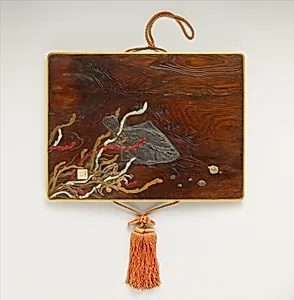
This exquisite lacquered wood panel, by the renowned Japanese artist Ogawa Haritsu ( known as Ritsuō in the 18th, hails from Japan's Edo period (16151868). During this of relative peace and prosperity, artisans like Haritsu elevated lacquerwork to new heights of refinement, producing objects that blended functionality with stunning aesthetic appeal. Haritsu, a master of the craft, was celebrated for his intricate designs, often drawing from nature, and this panel exemplifies his skill in transforming humble wood into a shimmering masterpiece. Crafted in lacquer—a resin derived from the sap of the urushi tree— the panel measures 10¾ by 14¾ inches and likely features motifs of fish, a common symbol in Japanese art representing abundance, perseverance, and the fluidity of life. The technique of lacquering, polished to a glossy sheen through multiple layers, allowed for vivid colors and embedded gold or silver powders (maki-e), creating depth and luminescence that catches the light beautifully. Such works were prized by samurai, merchants, and collectors alike. Part of The Howard Mansfield Collection at The Metropolitan Museum of Art, this panel offers a window into Edo Japan's cultural sophistication, where everyday materials became vehicles for philosophical and artistic expression. Visitors will appreciate its tactile elegance up close! (198 words)