
Panel
16th century
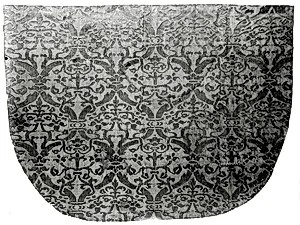
Medium
Silk, damask weave
Dimensions
50.8 × 36.8 cm (20 × 14 1/2 in.)
Classification
textile
Department
Textiles
Museum
Art Institute of Chicago
Accession Number
1883
Rights
Public Domain
Art Historical Context
This exquisite 16th-century silk damask panel, measuring 20 × 14½ inches, exemplifies the pinnacle of Renaissance-era textile artistry. Housed in the Art Institute of Chicago's Department, this anonymous work likely served as a decorative fragment from garments, furnishings, or ecclesiastical vestments, showcasing the era's fascination with luxurious fabrics that rivaled painting in prestige. The damask weave technique is the star here: a sophisticated reversible pattern created by varying the satin and sateen weaves, producing shimmering motifs that catch the light from different angles. Crafted from fine silk threads, it demanded skilled looms and weavers, often taking months to complete. Silk's rarity—imported from Asia via trade routes—made such panels symbols of wealth and status among European nobility and clergy. Though the exact origin and design remain mysteries, this panel highlights textiles' cultural role in the 16th century, blending artistry, commerce, and spirituality into tangible luxury. Visitors can appreciate how these woven masterpieces preserved intricate narratives without a single brushstroke.
About the Artist
Unknown
The artist designated as "Unknown" in our virtual museum's collection exemplifies a poignant chapter in art history: creators whose identities have faded into obscurity despite the enduring power of their work. With only one known artwork attributed to them in our holdings, this figure represents countless anonymous hands that shaped visual culture across centuries. Museums worldwide, including th...