
Panel
16th century
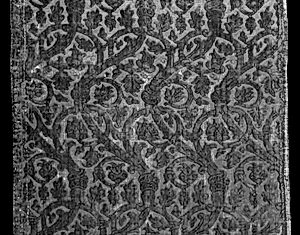
Medium
Silk, warp-float faced satin weave with supplementary pile warps forming cut and uncut voided velvet
Dimensions
85.9 × 56.8 cm (33 7/8 × 22 3/8 in.); Repeat: 34.3 × 14 cm (13 1/2 × 5 1/2 in.)
Classification
textile
Department
Textiles
Museum
Art Institute of Chicago
Accession Number
74719
Rights
Public Domain
Art Historical Context
This exquisite 16th-century silk panel, housed in the Art Institute of's Textiles Department, transports visitors to the lavish world of Renaissance luxury. Measuring nearly 86 by 57 cm, it features a repeating pattern (34.3 × 14 cm unit) that hints at its use in grand furnishings, garments, or ecclesiastical vestments—textiles that signified wealth and status among Europe's elite. Crafted in a warp-float faced satin weave with pile warps, the panel employs cut and uncut voided techniques. Here, intricate motifs emerge where the plush pile is sheared away in voids, creating a tactile contrast of raised velvet against smooth satin ground. This labor-intensive method, perfected by master weavers, showcases the era's technological prowess in silk production, likely centered in Italian looms like those of Venice or Genoa, where such fabrics were prized exports. Though the artist remains unknown, this panel exemplifies the artistic pinnacle of 16th-century textile design—blending engineering precision with ornamental splendor. Its shimmering silk invites touch (virtually, of course!), reminding us how textiles wove artistry into daily opulence.
About the Artist
Unknown
The artist designated as "Unknown" in our virtual museum's collection exemplifies a poignant chapter in art history: creators whose identities have faded into obscurity despite the enduring power of their work. With only one known artwork attributed to them in our holdings, this figure represents countless anonymous hands that shaped visual culture across centuries. Museums worldwide, including th...