
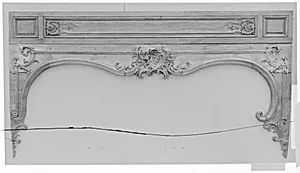
Panel (Dessus d'alcove)
Unknown Artist
first half 18th century
Medium
Carved oak
Dimensions
115 × 65 in. (292.1 × 165.1 cm)
Classification
Woodwork
Culture
French
Department
European Sculpture and Decorative Arts
Museum
Metropolitan Museum of Art, New York, NY
Credit
Gift of J. Pierpont Morgan, 1906
Accession Number
07.225.77
Rights
Public Domain
Art Historical Context
This magnificent carved oak *Panel (Dessus d'alcove)* hails from France in the first half of 18th century, a golden age for opulent interior design under the waning influence of Louis XIV and the rise of Louis XV's lighter, more playful aesthetics. The term "dessus d'alcove" refers to a grand overpanel, typically placed above a bed alcove or recessed niche in a salon or bedroom, serving as a focal point for room ensembles. At over 9 feet tall and 5 feet wide, its imposing scale speaks to the lavish ambitions of French aristocracy, transforming domestic spaces into theatrical displays of wealth and refinement. Crafted from oak—a resilient, fine-grained wood prized for its ability to hold intricate carvings—this piece exemplifies the virtuoso techniques of anonymous ébénistes and sculptors. Delicate relief work and bold projections would have captured the eye, harmonizing with gilt bronzes, tapestries, and furnishings in a *boiseries*-clad room. Though the artist remains unknown, such woodwork represents the pinnacle of French decorative arts, blending structural function with sculptural artistry. Generously gifted to The Metropolitan Museum of Art by J. Pierpont Morgan in 1906, this panel invites us to envision the splendor of Versailles-era châteaux, offering a tangible link to 18th-century French culture and its enduring legacy in European design.