
Panel (Dress Fabric)
Qing dynasty (1644–1911), 1875/1900
Medium
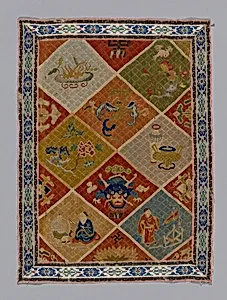
Geometric patterns with figures and precious things embroidered on gauze.
Dimensions
31.5 × 23.1 cm (12 3/8 × 9 1/8 in.)
Classification
weaving
Department
Textiles
Museum
Art Institute of Chicago
Accession Number
238399
Rights
Public Domain
Art Historical Context
This exquisite panel, crafted as dress fabric by Han-Chinese during the late Qing dynasty (circa 1875–1900), exemplifies the era's masterful textile traditions. Measuring a compact 31.5 × 23.1 cm, it was likely intended for elegant garments worn by the elite, reflecting the dynasty's blend of opulence and refinement amid China's transition toward modernity. The medium—delicate embroidery on translucent gauze—highlights advanced weaving and stitching techniques. Gauze, a finely woven silk, provided a lightweight, ethereal base ideal for flowing robes, while intricate threads depict geometric patterns interwoven with human figures and "precious things." These motifs, common in Qing textiles, symbolized prosperity, longevity, and harmony, drawing from longstanding Chinese iconography to convey auspicious wishes. Housed in the Art Institute of Chicago's Textiles Department, this panel underscores the cultural prestige of embroidery as both art and status symbol. In a period of imperial splendor, such pieces showcased Han-Chinese ingenuity, preserving motifs that bridged courtly luxury with everyday aspiration. Visitors will appreciate its fine detail, a testament to the enduring allure of Qing craftsmanship.
About the Artist
Han-Chinese
**Han-Chinese** was the collective attribution given to anonymous artisans of Han Chinese descent who crafted intricate embroidered textiles during the Qing dynasty (1644–1911). These makers, active primarily in the late 18th to early 20th centuries, specialized in luxurious garments and furnishings that showcased the pinnacle of Han Chinese needlework traditions. Their early lives and individual ...