
Panel from a Tent Lining
Unknown Artist
1725–50
Medium
Cotton; plain weave, mordant-painted and dyed, resist-dyed
Dimensions
H. 51 9/16 in. (131 cm) W. 36 5/8 in. (93 cm)
Classification
Textiles-Painted and/or Printed
Department
Islamic Art
Museum
Metropolitan Museum of Art, New York, NY
Credit
Purchase, Friends of Islamic Art Gifts, 2011
Accession Number
2011.528
Rights
Public Domain
Tags
Art Historical Context
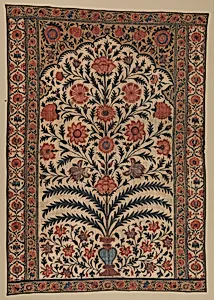
This exquisite *Panel from a Tent L*, created by an unknown artist between 5 and 1750, offers a glimpse into the opulent world of 18th-century Islamic interiors. Housed in the Metropolitan Museum of Art's Islamic Department, this cotton textile—measuring over 4 feet high and 3 feet wide—was likely part of a luxurious tent lining, a staple in nomadic and elite households across the Ottoman Empire, Persia, or Mughal India. Such panels adorned portable pavilions, transforming transient spaces into vibrant, flower-filled havens that reflected the era's love for nature-inspired splendor. Crafted from plain-weave cotton, the panel showcases sophisticated dyeing techniques: mordant-painting, where chemical fixatives were applied by hand to create precise patterns before immersion in dyes, combined with resist-dyeing to block colors in select areas. This labor-intensive process yielded rich, enduring hues and intricate floral motifs—think blooming roses, tulips, and lotuses—that evoke the Islamic artistic tradition of celebrating paradise gardens. These textiles were not just functional but symbols of status, blending artistry with everyday luxury. Today, this rare survivor highlights the ingenuity of anonymous artisans whose floral designs influenced global textiles, reminding us how portable art brought beauty to the open road. (198 words)