
Panel (Kesi) with a Phoenix and Other Birds
Unknown Artist
17th century
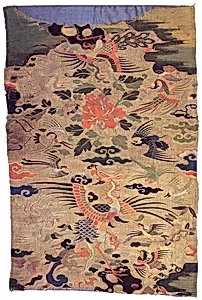
Medium
Silk, gilt paper, feathers
Dimensions
34 5/8 x 23 1/4 in. (87.9 x 59.1 cm)
Classification
Textiles-Tapestries
Culture & Period
China · Ming dynasty (1368–1644)
Department
Asian Art
Museum
Metropolitan Museum of Art, New York, NY
Credit
Purchase, Gifts in memory of Jean E. Mailey, 1994
Accession Number
1994.363
Rights
Public Domain
Tags
Art Historical Context
This exquisite *Panel (Kesi) with a Phoenix and Other Birds*, created in 17th-century China during the late Ming dynasty (1368–1644), showcases the pinnacle of imperial textile artistry. Crafted using the intricate kesi technique—a form of slit-tapestry weaving on silk—the panel incorporates gilt paper and feathers for a luxurious, shimmering effect. Measuring 34 5/8 x 23 1/4 inches, it depicts a majestic phoenix amid other birds, likely surrounded by floral motifs, evoking the natural harmony revered in Chinese aesthetics. The phoenix, or *fenghuang*, holds profound cultural symbolism as a divine bird representing virtue, prosperity, and the empress, often paired with peacocks or cranes in auspicious designs. Ming dynasty textiles like this were prized for palace decorations and scholarly pursuits, reflecting the era's technical mastery and love for vibrant, symbolic imagery. The innovative use of feathers and gilt paper added texture and luminosity, mimicking the iridescence of real plumage. Today, this anonymous masterpiece resides in the Metropolitan Museum of Art's Asian Art Department, acquired in 1994. It invites visitors to appreciate how Ming artisans wove imperial splendor into fabric, bridging art, nature, and cosmology in a single, breathtaking panel.