
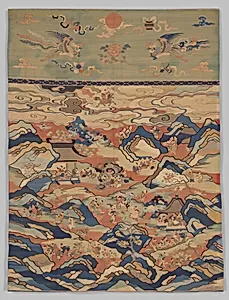
清 緙絲百子圖|Panel with boys at play
Unknown Artist
17th century
Medium
Silk, metallic thread, and feather thread tapestry
Dimensions
89 × 68 3/4 in. (226.1 × 174.6 cm)
Classification
Textiles-Tapestries
Culture & Period
China · Qing dynasty (1644–1911)
Department
Asian Art
Museum
Metropolitan Museum of Art, New York, NY
Credit
Purchase, The Vincent Astor Foundation Gift, 2011
Accession Number
2011.158
Rights
Public Domain
Tags
Art Historical Context
This magnificent Qing dynasty tapestry, titled *Panel with Boys at Play* ( 緙絲百子圖), dates to the 17th and exemplifies the exquisite artistry of Chinese kesi weaving. Crafted from silk, metallic threads, and threads, this nearly life-sized panel (89 × 68¾ in.) showcases the labor-intensive slit-tapestry technique, wefts are woven independently for each color, creating a luminous, painterly surface. The shimmering metallic and iridescent feather elements add depth and luxury, making it a prized decorative piece for elite homes or imperial settings. Depicting joyful scenes of boys at play amid flowers and graceful cranes, the composition draws on the auspicious "Hundred Boys" motif, a popular Qing-era theme symbolizing fertility, prosperity, and many heirs—wishes for familial bliss and continuity. Cranes, emblems of longevity, and blooming flowers enhance the celebratory mood, reflecting Confucian ideals of harmony and abundance. Acquired by the Metropolitan Museum of Art in 2011 through the Vincent Astor Foundation, this rare textile transports visitors to the opulent world of 17th-century China, where such tapestries blended technical mastery with profound cultural symbolism.