
Panther
model c. 1831, cast by 1874
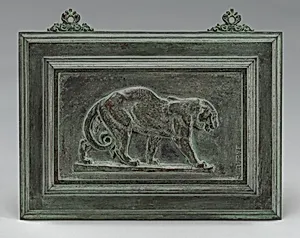
Medium
bronze
Dimensions
overall: 13.65 × 19.05 cm (5 3/8 × 7 1/2 in.)
Classification
Sculpture
Department
CSD
Museum
National Gallery of Art, Washington, D.C.
Credit
Corcoran Collection (Museum Purchase)
Accession Number
2015.19.3875
Rights
Public Domain
Art Historical Context
Antoine-Louis Barye *Panther*, modeled around 1831 and cast in bronze by 1874, captures the raw power and grace of its wild subject in a compact sculpture measuring just 5⅜ × 7½ inches. This tabletop masterpiece, now part of the National Gallery Art’s Corcoran, exemplifies Barye’s mastery of animalier sculpture—a niche he helped pioneer in 19th-century France. a leading Romantic sculptor, Barye inspiration from the natural world, studying live animals at the Paris Jardin des Plantes to infuse his works with anatomical precision and dynamic movement. Unlike the static classical figures of the era, his bronzes pulsed with life, reflecting Romanticism’s fascination with nature’s untamed forces. The lost-wax casting technique allowed for intricate details in the panther’s musculature and fur, while bronze’s enduring patina evokes the beast’s sleek, shadowy hide. This piece not only showcases Barye’s technical innovation but also served as a bridge between fine art and decorative objects, adorning bourgeois homes amid France’s industrial boom. Visitors will appreciate how *Panther* embodies the era’s blend of scientific observation and artistic passion, inviting us to marvel at wildlife’s fierce elegance up close.
About the Artist
Antoine-Louis Barye · 1795–1875
Antoine-Louis Barye (1795–1875) was born in Paris on September 24, the son of goldsmith Pierre Barye and Marguerite Barye. Following family tradition, he apprenticed as a goldsmith under his father and, around 1810, with Martin-Guillaume Biennais, goldsmith to Napoleon. After brief military service, Barye pursued sculpture, studying under François-Joseph Bosio in 1816 and painter Baron Antoine-Jea...