
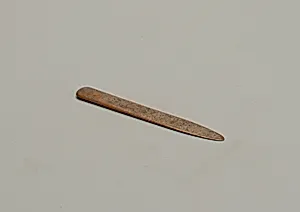
Paper knife
ca. 1889
Medium
metalwork
Classification
metalwork
Department
Smithsonian Collection
Museum
Smithsonian American Art Museum
Credit
Gift of the daughters of Louis deBébian Moore
Accession Number
1976-58-2
Rights
Public Domain
About this artwork
Research in Progress
Art Historical Context
This elegant paper knife, crafted around 1889 by an unknown artisan, exemplifies the refined metalwork traditions of late 19th-century America During the Gilded Age, such utilitarian objects blended functionality with artistry, often featuring intricate engravings, embossing, or chasing techniques to transform everyday tools into desk accessories worthy of a gentleman's study or a lady's writing table. Paper knives like this one were essential for slicing open sealed envelopes or thick book pages before the advent of modern letter openers, reflecting a era when correspondence was a cornerstone of social and business life. Housed in the Smithsonian American Art Museum's metalwork collection, this piece highlights the skilled craftsmanship of American decorative arts at the turn of the century. Its precise medium—likely silver, brass, or a similar alloy—demonstrates the era's advances in metal fabrication, where hand-forged details could convey elegance and status. Though research is ongoing, the object's provenance adds intrigue: it was generously gifted by the daughters of Louis deBébian Moore, preserving a slice of personal history within a national treasure. Visitors, imagine wielding this heirloom to unveil a long-lost letter— a tangible link to Victorian-era refinement!
About the Artist
Unknown
The artist designated as "Unknown" in our virtual museum's collection exemplifies a poignant chapter in art history: creators whose identities have faded into obscurity despite the enduring power of their work. With only one known artwork attributed to them in our holdings, this figure represents countless anonymous hands that shaped visual culture across centuries. Museums worldwide, including th...