
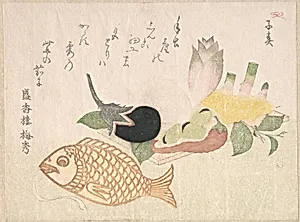
Papier-Mache Fish and Various Vegetables
probably 1815
Medium
Woodblock print (surimono); ink and color on paper
Dimensions
5 9/16 x 7 7/16 in. (14.1 x 18.9 cm)
Classification
Prints
Culture & Period
Japan · Edo period (1615–1868)
Department
Asian Art
Museum
Metropolitan Museum of Art, New York, NY
Credit
H. O. Havemeyer Collection, Bequest of Mrs. H. O. Havemeyer, 1929
Accession Number
JP2064
Rights
Public Domain
Tags
Art Historical Context
**Papier-Mâché Fish and Various Vegetables** by Takashima Chiharu, likely created around 1815, is a woodblock print from Japan's Edo period (1615–1868). This intimate *surimono*—a deluxe, privately commissioned print—measures just 5 9/16 x 7 7/16 inches and features rendered papier-mâché fish alongside carrots, eggplants, and flowers. Takashima, a specialist in such small-scale works, captures the textures of these everyday objects with vibrant inks and colors on paper, evoking a sense of playful abundance. Surimono like this were often produced for poetry societies or New Year's greetings, blending ukiyo-e artistry with literati culture. Takashima's style emphasizes fine detail and subtle humor, turning humble produce and crafts into subjects of beauty. The papier-mâché fish, possibly a nod to festival toys or seasonal decorations, alongside fresh vegetables, reflects Edo Japan's fascination with nature's bounty and the transient beauty of daily life. Housed in the Metropolitan Museum of Art's Asian Art Department as part of the H. O. Havemeyer Collection (1929), this print highlights the technical mastery of woodblock printing—precise carving and layering for lifelike effects. It invites visitors to appreciate how ordinary items symbolized prosperity and joy in Tokugawa-era Japan.