
Paradise
ca. 1598
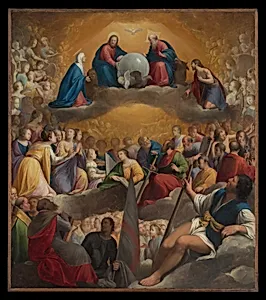
Medium
Oil on copper
Dimensions
Overall 21 3/8 x 18 7/8 in. (54.3 x 47.9 cm); painted surface 20 7/8 x 18 3/8 in. (53 x 46.7 cm)
Classification
Paintings
Department
European Paintings
Museum
Metropolitan Museum of Art, New York, NY
Credit
Theodore M. Davis Collection, Bequest of Theodore M. Davis, by exchange, 1971
Accession Number
1971.93
Rights
Public Domain
Tags
Art Historical Context
Behold *Paradise*, a luminous oil-on-copper panel by Venetian artist Carlo Saraceni, created around 1598. Measuring just over 20 by 18 inches on its painted surface, this intimate work captures a heavenly vision featuring the Virgin Mary, Christ, Saint John the Baptist, Saint George—key figures in Christian iconography gathered in divine harmony. The choice of copper as a support was prized in late Renaissance Italy for its smooth, reflective surface, enabling Saraceni's precise brushwork and jewel-like colors that evoke ethereal light. Saraceni, active in Venice and later Rome, bridges Mannerism and the emerging Baroque, with this early piece showcasing his affinity for sacred narratives amid the Counter-Reformation's emphasis on spiritual fervor. Oil on copper allowed for meticulous detail in rendering fabrics, halos, and landscapes, creating a sense of otherworldly depth within a compact format—ideal for private devotion. Now in the Metropolitan Museum of Art's European Paintings collection, thanks to the Theodore M. Davis bequest, *Paradise* invites visitors to ponder eternal bliss, blending technical innovation with profound faith. A gem of late 16th-century artistry!