
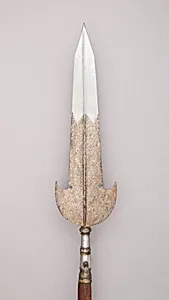
Partisan
Unknown Artist
ca. 1600
Medium
Steel, wood, gold
Dimensions
L. 85 3/4 in. (217.7 cm); L. of head 21 1/2 in. (54.6 cm); W. 5 3/16 in. (13.2 cm); Wt. 4 lbs. 13 oz. (2182.9 g)
Classification
Shafted Weapons
Culture
French
Department
Arms and Armor
Museum
Metropolitan Museum of Art, New York, NY
Credit
Gift of William H. Riggs, 1913
Accession Number
14.25.257
Rights
Public Domain
Art Historical Context
Step into the Arms and Armor gallery to encounter this striking *Partisan*, a masterful French shafted weapon from around 1600. Crafted steel, wood, and gold, it measures an imposing 85¾ inches in length, with a substantial 21½-inch head, weighing just over 4 pounds. As a polearm with a broad, axe-like blade flanked by spear points, the partisan was both a formidable battlefield tool and a symbol of martial prestige, wielded by elite infantry or ceremonial guards. Dating to the late Renaissance in France—amid the turbulent reigns of Henry IV and the early Bourbon dynasty—this weapon reflects the era's blend of military innovation and opulence. Partisans like this one armed household troops and Swiss mercenaries, offering reach and versatility against cavalry or in pike formations. Its gold accents suggest high status, possibly for a noble retinue, highlighting how arms evolved from pure utility to ornate displays of power. The unknown artisan's skill shines in the steel's precise forging and gilding, transforming a tool of war into a work of decorative art. Donated to the Metropolitan Museum of Art in 1913 by William H. Riggs, this partisan invites us to ponder the artistry behind history's conflicts.