
Patolu Sari
Unknown Artist
19th century
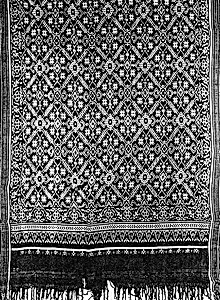
Medium
Silk wrapped with strips of silver foil
Dimensions
46 x 178 in. (116.8 x 452.1 cm)
Classification
Costumes
Culture
India (Gujerat)
Department
Asian Art
Museum
Metropolitan Museum of Art, New York, NY
Credit
Gift of Ernest Erickson Foundation, 1988
Accession Number
1988.104.97
Rights
Public Domain
Art Historical Context
Behold the exquisite *Patolu Sari*, a 19th-century garment from Gujarat, India, now gracing the Metropolitan Museum of's Asian Art collection. an impressive 46 x 178 inches, this flowing silk sari exemplifies the opulent textiles crafted in the Patan region, where skilled weavers produced luxury costumes for elite patrons. As a gift from the Ernest Erickson Foundation in 1988 it offers a glimpse into Gujarat's rich tradition of finely woven attire, prized for both beauty and status. The sari's medium—silk threads wrapped with strips of silver foil—creates a shimmering, metallic luster known as zari, a technique that elevated Indian textiles to symbols of wealth and celebration. This labor-intensive process involved tightly coiling fine silver strips around silk cores before weaving, resulting in intricate patterns that catch the light with every movement. Patolu saris like this one are renowned for their double ikat dyeing and weaving, where motifs emerge sharply from precisely resist-dyed warp and weft threads, demanding extraordinary precision. Culturally, such saris were heirlooms worn during weddings and festivals, embodying Gujarat's Jain-influenced artistry with geometric and floral designs symbolizing prosperity and protection. This piece invites you to imagine it draped elegantly, whispering tales of India's vibrant textile heritage.