
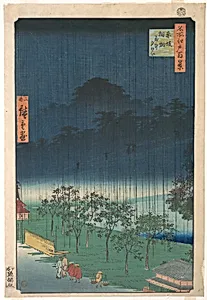
Paulownia Trees at Akasaka in the Evening Rain
Medium
Woodblock print; ink and color on paper
Dimensions
H. 14 1/8 in. (35.9 cm); W. 9 1/2 in. (24.1 cm)
Classification
Prints
Culture & Period
Japan · Edo period (1615–1868)
Department
Asian Art
Museum
Metropolitan Museum of Art, New York, NY
Credit
Rogers Fund, 1918
Accession Number
JP236
Rights
Public Domain
Tags
Art Historical Context
This evocative woodblock print, created by Utagawa Hiroshige II in 1859 during Japan’s Edo period, captures a tranquil moment of evening rain at Akasaka. As part of the vibrant ukiyo-e tradition, Hiroshige II continued the legacy of his famous predecessor by depicting atmospheric landscapes that highlight the beauty of everyday scenes. The work reflects the period’s fascination with seasonal changes and the transient nature of weather, inviting viewers to pause and appreciate nature’s quiet drama. Executed in ink and color on paper, the medium of woodblock printing allowed artists like Hiroshige II to produce affordable, widely circulated images that brought distant or poetic views into urban households. The vertical composition emphasizes slender paulownia trees bending under the rain, with subtle human figures adding a sense of scale and quiet activity. Such prints played a significant cultural role in Edo-period Japan, blending art with accessible storytelling. Measuring just over 14 inches high, this intimate piece from the Metropolitan Museum’s Asian Art collection exemplifies how Hiroshige II used delicate color gradations and rhythmic lines to convey both the freshness of rain and the enduring presence of nature amid city life.
About the Artist
Utagawa Hiroshige II · 1826–1869
Utagawa Hiroshige II, born Suzuki Chinpei in 1826, was one of the most accomplished ukiyo-e artists of mid-nineteenth century Japan. He entered the studio of the celebrated landscape master Utagawa Hiroshige I — known for his iconic series "The Fifty-three Stations of the Tokaido" — and proved himself the most talented of the elder artist's few students. So highly regarded was the young pupil that...