Ctrl K
1826–1869
Utagawa Hiroshige II, born Suzuki Chinpei in 1826, was one of the most accomplished ukiyo-e artists of mid-nineteenth century Japan. He entered the studio of the celebrated landscape master Utagawa Hiroshige I — known for his iconic series "The Fifty-three Stations of the Tokaido" — and proved himself the most talented of the elder artist's few students. So highly regarded was the young pupil that Hiroshige I bestowed upon him the artist name Shigenobu, an honor embedded within the master's own name and signifying a direct artistic lineage. After Hiroshige I's death in 1858, Shigenobu married the master's daughter Otatsu and inherited the prestigious Hiroshige name, becoming Hiroshige II.
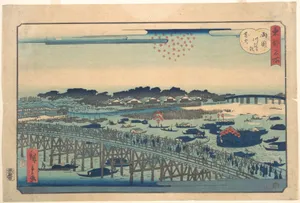
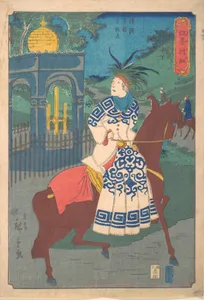
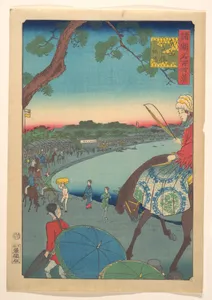
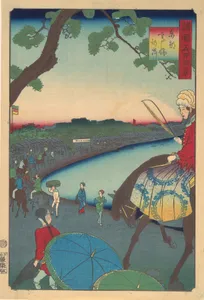
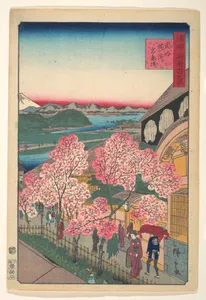
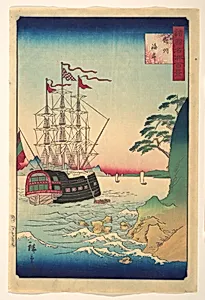
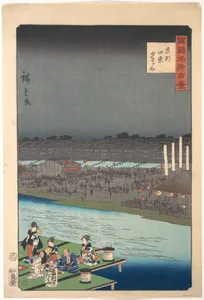
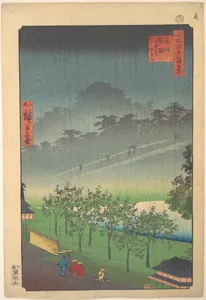
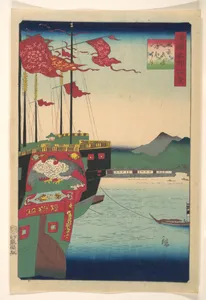
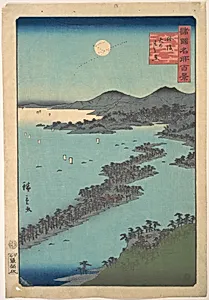
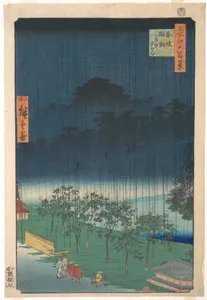
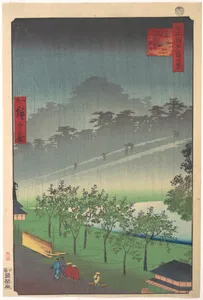
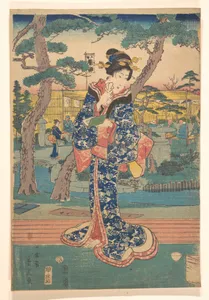
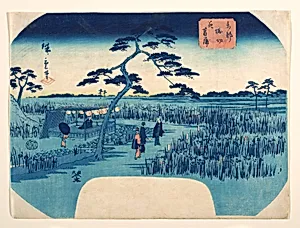
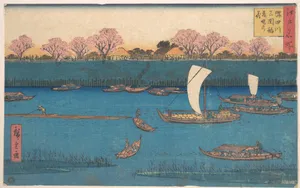
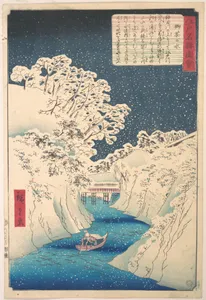
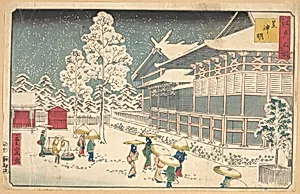
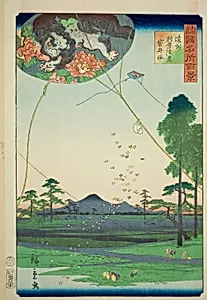
Working firmly within the Utagawa school tradition, Hiroshige II specialized in landscape prints that followed the compositional and atmospheric vocabulary his teacher had perfected — dramatic perspectives, evocative weather effects, and lyrical depictions of travel and nature. In the years immediately following his inheritance of the name, he completed Hiroshige I's unfinished "One Hundred Famous Views of Edo," seamlessly continuing the series. He also launched ambitious series of his own, most notably "One Hundred Views of Famous Places in Various Provinces" (1859–1861) and "Forty-eight Views of Famous Places of Edo" (1860–1865).
The later years of Hiroshige II's life brought hardship and personal upheaval. In 1865, following the dissolution of his marriage, he relocated from Edo to Yokohama and adopted a new name, Kisai Rissho. He died on October 21, 1869, at the age of forty-three, in Yokohama.
Hiroshige II's legacy is a nuanced one. For generations, his prints were so closely aligned in style, subject, and signature with those of Hiroshige I that early Western scholars failed to recognize him as a distinct artist at all. Today, however, he is appreciated as a skilled and dedicated practitioner who preserved and extended one of ukiyo-e's most beloved traditions at a time when the entire genre was facing the pressures of a rapidly modernizing Japan.