
明 佚名 仿趙孟頫 垂虹亭圖 卷|Pavilion of the Hovering Rainbow Bridge
16th century
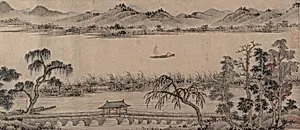
Medium
Handscroll; ink and color on paper
Dimensions
Image: 9 5/8 x 48 1/4 in. (24.4 x 122.6 cm) Overall with mounting: 11 5/8 x 341 3/4 in. (29.5 x 868 cm)
Classification
Paintings
Culture & Period
China · Ming dynasty (1368–1644)
Department
Asian Art
Museum
Metropolitan Museum of Art, New York, NY
Credit
Bequest of John M. Crawford Jr., 1988
Accession Number
1989.363.76
Rights
Public Domain
Tags
Art Historical Context
In the serene world of Ming dynasty (1368–1644) landscape painting, *Pavilion of theing Rainbow Bridge* stands as a masterful handscroll created by an unidentified artist in the 16 century. This work emulates the refined style of Zhao Mengfu1254–1322), a Yuan dynasty luminary whose literati approach blended elegant brushwork, poetic inscription, and a deep reverence for nature. By imitating Zhao, the anonymous Ming painter tapped into a revered tradition, where scholars-artists sought to capture the harmonious interplay of mountains, rivers, and pavilions—evoking the Daoist ideal of unity between humanity and the cosmos. Rendered in ink and subtle colors on paper, the scroll unfolds a dreamlike vista of mist-shrouded peaks, arched bridges, and leisurely boats gliding along a winding river. The handscroll format, measuring an impressive 48 inches in image length (with a total mounting over 28 feet), invites viewers to unroll it slowly, immersing themselves in layered scenes that reveal themselves gradually. This technique highlights the medium's cultural role in private contemplation, often shared among elite collectors during scholarly gatherings. Housed in the Metropolitan Museum of Art's Asian Art department (Bequest of John M. Crawford Jr., 1988), this piece exemplifies Ming artists' fascination with classical revival, bridging Yuan elegance and Ming vitality. Its poetic title suggests a "hovering rainbow" pavilion, symbolizing ethereal beauty and the transient joys of nature—a timeless invitation to pause and reflect.