
Peach-shaped wine pot or teapot
ca. late 17th century
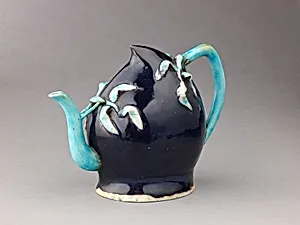
Medium
Porcelain with relief decoration under polychrome glazes.
Dimensions
Height: 5 1/2 in. (14 cm.)
Classification
Ceramics
Culture
Chinese
Department
Robert Lehman Collection
Museum
Metropolitan Museum of Art, New York, NY
Credit
Robert Lehman Collection, 1975
Accession Number
1975.1.1699
Rights
Public Domain
Art Historical Context
This delightful peach-shaped wine pot or teapot, crafted in China around the late 17th century exemplifies the exquisite porcelain artistry of the Qing dynasty's Kangxi reign (1662–1722). just 5½ inches (14 cm) tall, its playful form mimics a ripe peach, complete with a leafy stem handle and subtle relief decoration—raised motifs molded into the clay before firing—vibrantly colored under layers of polychrome glazes. These glazes, in shades of green, yellow, and aubergine, create a lifelike, glossy finish that catches the light, showcasing the technical mastery of Jingdezhen potters, China's porcelain capital. In Chinese culture, the peach symbolizes longevity and immortality, drawing from ancient myths of the Queen Mother of the West's magical peach orchards. Such whimsical vessels were likely used for wine or tea in elite households or as export wares, blending utility with auspicious symbolism. The relief technique under glazes allowed for textured depth without compromising the translucent purity of porcelain, a hallmark innovation that influenced global ceramics. Housed in the Robert Lehman Collection at The Metropolitan Museum of Art since 1975, this piece highlights the enduring allure of Kangxi porcelain—prized for its refinement and exported worldwide, shaping tastes from Europe to America. A charming reminder of how everyday objects carried profound cultural wishes for prosperity and long life.
About the Artist
Chinese
The artist known simply as "Chinese" in museum records represents the vast tradition of anonymous or unattributed masters in Chinese art history, with 99 works preserved in our collection. These pieces exemplify the enduring legacy of guó huà, or traditional Chinese painting, one of the world's oldest continuous artistic practices. Early life is not well documented, as is common for many practitio...