
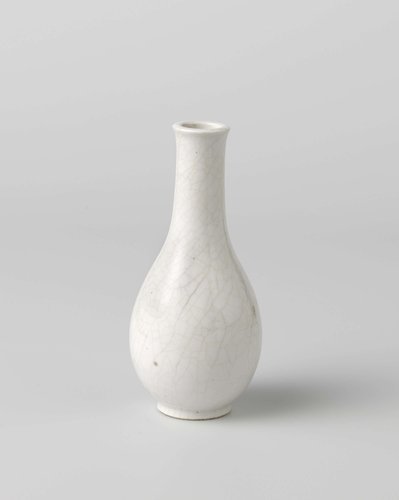
Pear-shaped vase with incised flowering plants
ca. 1700 - ca. 1799
Medium
turning
Dimensions
2.4; 12.3; 3; 6
Rights
Public Domain
About this artwork
hoogte 12,3 cm
Art Historical Context
This delicate pear-shaped vase, standing just 12.3 cm tall with a slender 2.4 cm diameter, exemplifies the refined craftsmanship of anonymous artisans from the 18th (ca. 1700–1799). Its elegant form, achieved through the technique of turning—where a potter's wheel or lathe smoothly refines the clay after initial throwing—highlights the precision valued in ceramic production during this era. The vase's narrow profile suggests it may have served as a small decorative object, perhaps for holding incense, flowers, or even as a collector's curiosity. The standout feature is the incised decoration of flowering plants, carved directly into the soft clay surface before firing. This labor-intensive sgraffito-like method allowed motifs to emerge subtly through contrasts in glaze or clay body, showcasing the artist's intimate knowledge of material and fire. Flowering plants were a popular theme in 18th-century ceramics, symbolizing nature's beauty and seasonal renewal, often inspired by East Asian influences amid growing global trade. Though unattributed, such vases reflect the era's cross-cultural exchanges, blending local pottery traditions with imported aesthetics. Visitors will appreciate its intimate scale and tactile elegance, a quiet testament to everyday artistry in a time of artistic innovation.
About the Artist
anonymous
In the vast tapestry of art history, "Anonymous" stands not as a singular individual but as a collective designation for countless unidentified creators whose works have endured across millennia. These artists, spanning prehistoric cave painters to medieval illuminators and folk craftsmen, produced the foundational layers of human visual culture. Prior to the Renaissance, when individual fame emer...