
Pedestal Designs
Classification
Department
Smithsonian Collection
Museum
Smithsonian American Art Museum
Credit
Purchased for the Museum by the Advisory Council
Accession Number
1921-6-365-6
Rights
Public Domain
About this artwork
Research in Progress
Art Historical Context
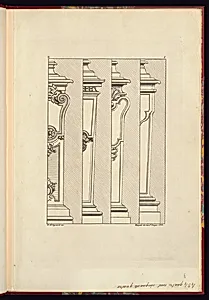
Gilles-Marie Oppenord (2–1742), a leading French architect and ornamental designer of the early 18th century, created *Pedestal Designs* in 173–38. Trained in Rome and later serving as designer to the Regent Philippe d'Orléans, Oppenord was a pivotal figure in the Rococo style, blending Italian Baroque exuberance with lighter, more playful French elegance. This print, now in the Smithsonian American Art Museum's collection (purchased by the Advisory Council), exemplifies innovative approach to decorative architecture during the late Régence period, just as Rococo flourished in Parisian salons and royal residences. Pedestals, as sculpted bases for vases, busts, or candelabra, were essential in 18th-century interiors, and Oppenord's designs showcase intricate motifs like scrolling foliage, shells, and fantastical creatures—hallmarks of Rococo asymmetry and whimsy. Produced as an etched or engraved print (medium under study), it served as a pattern book for artisans, disseminating sophisticated ornament across Europe. Though research continues, this work highlights how such prints bridged fine art and craft, influencing furniture makers and stucco workers. Today, *Pedestal Designs* offers a glimpse into the opulent decorative arts that defined pre-Revolutionary France, reminding us of Rococo's delight in fantasy amid growing Enlightenment rationalism.