
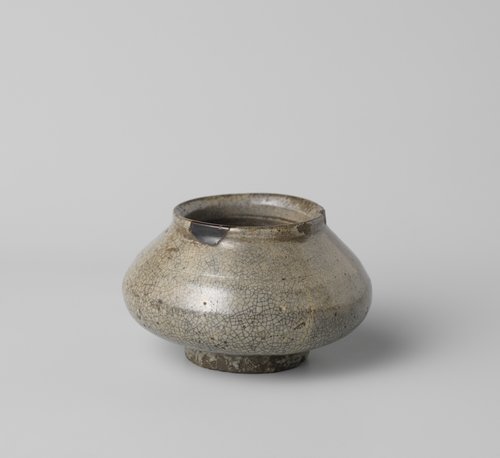
Peervormige pot met een grijs glazuur
c. 1600 - c. 1699
Medium
turning
Dimensions
4.6; 9.2; 5.7; 5.7
Rights
Public Domain
About this artwork
Gedrukt peervormige pot van steengoed, met een gecraqueleerd grijs glazuur. Twee chips in de rand, waarvan een gerestaureerd.
Art Historical Context
This delicate pear-shaped pot, crafted anonymously around 1600–1699, exemplifies everyday stoneware pottery from the early modern period. Standing just 5.7 cm high and wide, its compact form—wheel-thrown on a potter lathe ("draaien" in Dutch)—suggests it was designed for practical use, perhaps as a small container for spices, inks, or personal items. The pot's surface bears a printed decoration under a distinctive gray glaze that has developed a craquelé, or fine network of cracks, adding a textured, aged patina over time. The gray glaze, a hallmark of durable stoneware production in 17th-century Europe, provided both waterproofing and aesthetic appeal, reflecting techniques honed in regions like the Rhineland or Low Countries where such wares were mass-produced. Wheel-throwing allowed for precise symmetry in the pear shape, while the printed motifs (likely stamped patterns) hint at emerging decorative innovations amid growing trade and urbanization. Though showing two rim chips—one restored—this pot whispers of centuries of handling, underscoring stoneware's role in bridging utility and subtle artistry. A charming survivor, it invites us to ponder the anonymous hands that shaped daily life long ago.
About the Artist
anonymous
In the vast tapestry of art history, "Anonymous" stands not as a singular individual but as a collective designation for countless unidentified creators whose works have endured across millennia. These artists, spanning prehistoric cave painters to medieval illuminators and folk craftsmen, produced the foundational layers of human visual culture. Prior to the Renaissance, when individual fame emer...